
When your muscles feel tight, tired, or overworked, massage can be a helpful part of a regular wellness and recovery routine. However, not every massage technique works in the same way. Cupping and deep tissue massage are two different approaches that people often consider when they want focused attention on muscle tension and physical comfort.
Both techniques can be used by active adults and people who exercise regularly, but the methods are quite different. Deep tissue massage relies on hands-on pressure and slow, focused movements, while cupping uses specialized cups to create suction on the skin.
Understanding the differences can help you decide which service may better match your goals. Sol Touch Massage in Tempe, Arizona, offers both cupping and deep tissue massage, along with sports massage, stretching massage, and Swedish massage for clients with different wellness needs.
What Is Cupping Massage?
Cupping is a massage technique that uses cups placed on the skin to create suction. Depending on the type of cupping being performed, the cups may remain in one position or be moved across the skin using appropriate massage techniques.
The suction creates a pulling sensation rather than the pushing pressure used during traditional massage. Many people choose cupping as part of a wellness or recovery routine, particularly when they want to try a different approach to muscle care.
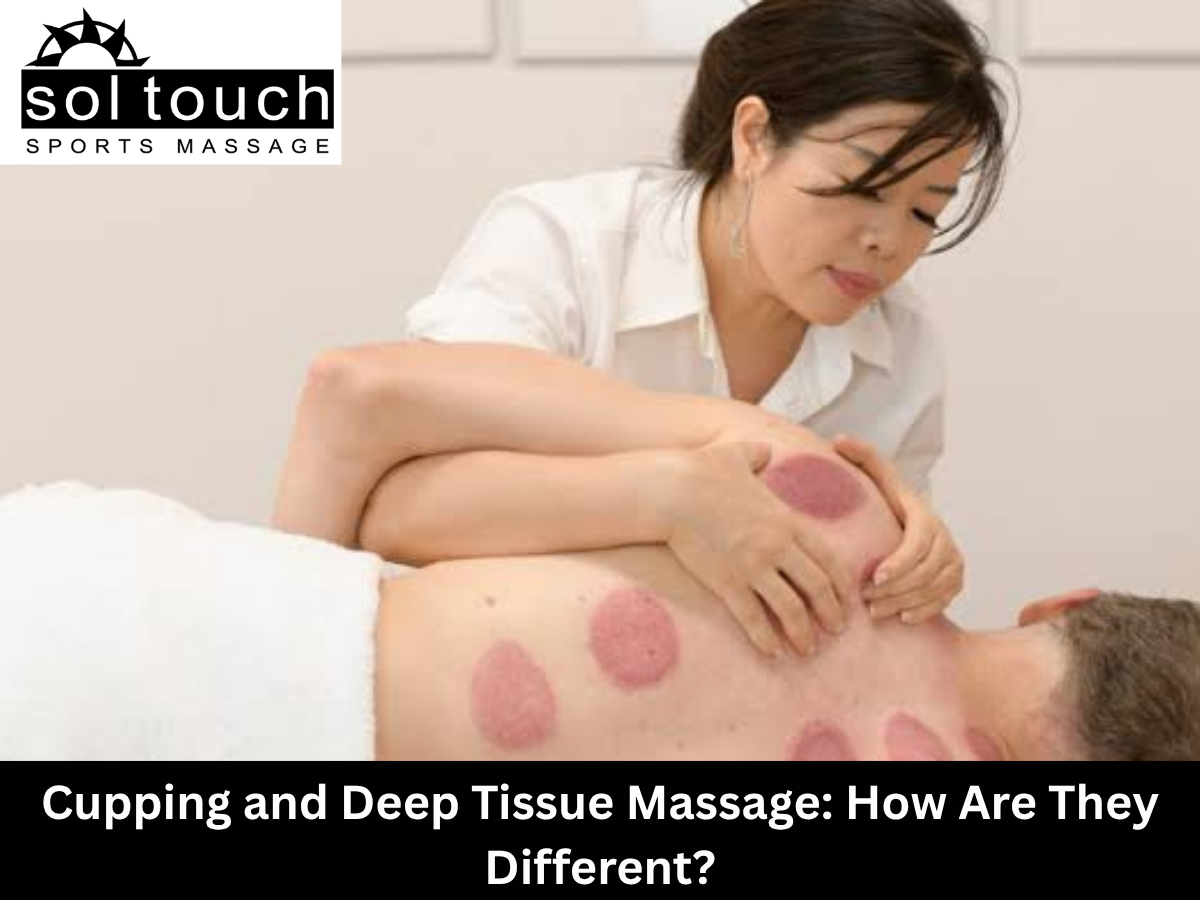
Cupping can leave temporary circular marks on the skin. These marks are generally different from bruises caused by an impact because they result from the suction created by the cups.
What Does Cupping Feel Like?
The sensation can vary from person to person. Some people describe cupping as a pulling or tight sensation on the skin, while others find it relaxing.
The intensity of suction should be appropriate for the individual. If the sensation becomes uncomfortable, you should communicate with your therapist so adjustments can be made.
Because cupping is not appropriate for everyone, discuss relevant health conditions, medications, injuries, and other concerns with your massage therapist before your session.
What Is Deep Tissue Massage?
Deep tissue massage uses focused hands-on techniques to work with muscles and other soft tissues. The therapist may use slower strokes, sustained pressure, and targeted movements on areas where the client experiences muscle tightness.
Despite its name, deep tissue massage does not mean that maximum pressure should always be used. The therapist should adjust the pressure based on the client's comfort, the area being addressed, and the goals of the session.
Deep tissue massage is often chosen by active people, athletes, and individuals who want focused work rather than a primarily relaxation-based massage.
What Does Deep Tissue Massage Feel Like?
Deep tissue massage can feel more intense than a Swedish massage because the therapist may apply more focused pressure.
However, intense pressure should not be confused with pain. You should be able to communicate with your therapist throughout the session and let them know if the pressure feels too strong.
The goal is to provide an appropriate massage experience, not to make the session as uncomfortable as possible.
Cupping vs. Deep Tissue Massage: The Main Differences
Although both approaches may be included in a wellness routine, they use very different techniques.
Different Methods
The most obvious difference is how the techniques are performed.
Deep tissue massage uses the therapist's hands, fingers, forearms, or other appropriate techniques to apply pressure and movement to soft tissues. Cupping uses suction created by cups placed on the skin.
One technique pushes and works through the tissues, while the other creates a pulling sensation through suction.
Different Sensations
Cupping typically creates a pulling or lifting sensation on the skin. Deep tissue massage usually creates pressure and movement through the muscles and surrounding soft tissues.
Neither technique should require you to tolerate severe discomfort. Your therapist should adjust the session based on your feedback.
Different After-Effects
Cupping may leave temporary circular marks on the skin. Their appearance and duration can vary.
Deep tissue massage does not normally create circular suction marks, although some people may experience temporary tenderness after a deeper session.
Individual responses vary, so it is important to communicate with your therapist and follow appropriate aftercare recommendations.
Which Is Better for Muscle Tension?
There is no single answer because people have different needs and preferences.
Someone who prefers focused hands-on pressure may enjoy deep tissue massage. Someone interested in incorporating suction-based techniques into their wellness routine may prefer cupping.
Your activity level can also influence your choice. Athletes and active adults may use either technique depending on their recovery goals and personal preferences.
If you are unsure, discuss your goals with a professional massage therapist before choosing a service.
Cupping and Deep Tissue Massage for Active People
People who exercise regularly often pay close attention to muscle recovery. Running, cycling, weightlifting, and sports can place repeated demands on the body.
For Runners
Runners may experience tightness in the legs and hips, especially after increasing mileage or completing demanding workouts.
Some runners choose deep tissue massage for focused hands-on work, while others may incorporate cupping into their recovery routine.
For Weightlifters
Strength training can place significant demands on muscles throughout the body. Weightlifters may experience temporary tightness after heavy training sessions.
Deep tissue massage can provide focused pressure, while cupping offers a different type of sensation. The appropriate choice depends on the person's goals and condition.
For Sports Players
Basketball players, soccer players, cyclists, tennis players, and other athletes may incorporate massage into their broader recovery routines.
Sports massage may be another option when the session needs to be specifically connected to athletic activity. At Sol Touch Massage, clients can choose among several services depending on their needs.
Can You Combine Cupping and Deep Tissue Massage?
In some situations, different massage techniques can be included in the same overall session. Whether combining techniques is appropriate depends on the individual, the therapist's training, and the goals of the appointment.
Some clients may prefer to focus on one technique, while others may benefit from a session that incorporates multiple approaches.
It is important not to assume that more techniques automatically produce better results. The goal should be an appropriate and comfortable session based on your needs.
Discuss your preferences and expectations with your massage therapist before treatment.
Cupping vs. Deep Tissue Massage for Relaxation
If relaxation is your main priority, the choice may be different.
Deep tissue massage can be relaxing for some people, but the focused pressure may feel more intense than a traditional Swedish massage.
Cupping can also be relaxing for some clients, but the suction sensation and temporary skin marks may not appeal to everyone.
If you primarily want a gentle, calming experience, Swedish massage may be a better option to discuss with your therapist.
What Should You Expect at Your Appointment?
Whether you choose cupping or deep tissue massage, your session should begin with a conversation about your goals.
Tell your therapist what you want from the appointment and identify areas that feel tight or tired. If you exercise regularly, explain what types of activities you do and whether you have recently increased your training.
Be sure to mention relevant injuries, medical conditions, medications, or recent procedures. This information can help determine whether massage is appropriate.
During the session, communicate about pressure and comfort. Afterward, allow your body enough time to recover, particularly if you received an intense or unfamiliar technique.
When Should You Avoid These Techniques?
Massage is not appropriate for every situation. If you have a significant injury, severe unexplained pain, swelling, numbness, weakness, fever, or another concerning symptom, speak with a health care professional before receiving massage.
Certain health conditions or medications may also require additional precautions. Your massage therapist should know about relevant health information before beginning a session.
Cupping may also be unsuitable for some skin conditions or situations where suction could cause complications. When in doubt, seek medical advice first.
Massage should complement appropriate health care, not replace it.
How to Choose Between Cupping and Deep Tissue Massage
Start with your main goal.
If you want focused hands-on pressure on areas of muscle tension, deep tissue massage may be worth considering. If you are interested in suction-based techniques and want to add cupping to your wellness routine, cupping may be a better match.
If your primary goal is athletic recovery, sports massage is another service to consider. If flexibility and movement are your priorities, stretching massage may be more appropriate.
For general relaxation, Swedish massage may be a good option.
Sol Touch Massage in Tempe offers all of these services, making it easier to discuss your goals and consider different massage approaches.
Why Consider Sol Touch Massage in Tempe?
Choosing a massage provider with multiple service options can make it easier to find an approach that matches your lifestyle.
Sol Touch Massage provides cupping, deep tissue massage, sports massage, stretching massage, and Swedish massage. The business also has experience working with active individuals and athletes, making it a relevant option for people who include exercise and sports in their routines.
Whether you want focused muscle work, athletic recovery, assisted stretching, cupping, or relaxation, discussing your goals with your therapist is an important first step.
The right massage is not necessarily the strongest one. It is the one that makes sense for your needs and can be provided safely and comfortably.
Practical Tips Before Your Massage
Drink enough water throughout the day and avoid arriving at your appointment immediately after an exhausting workout.
Wear or bring comfortable clothing as recommended by your provider, and give yourself enough time to complete the intake conversation without feeling rushed.
Most importantly, tell your therapist about recent injuries, areas of concern, and your preferred pressure. Good communication can make the session more comfortable.
After your massage, pay attention to how you feel. Temporary soreness can occur after deeper work, but severe or unusual symptoms should not be ignored.
Conclusion
Cupping and deep tissue massage are two different approaches that can both have a place in a wellness and recovery routine. Deep tissue massage uses focused hands-on pressure, while cupping uses suction to create a different type of sensation.
Neither option is automatically better. Your choice should depend on your goals, activity level, preferences, and overall health.
For clients in Tempe, Sol Touch Massage offers both cupping and deep tissue massage, along with sports massage, stretching massage, and Swedish massage. If you are unsure which approach is right for you, contact Sol Touch Massage to discuss your goals and choose a service that fits your needs.
Frequently Asked Questions
What is the main difference between cupping and deep tissue massage?
Cupping uses suction created by cups placed on the skin, while deep tissue massage uses focused hands-on pressure and slow techniques to work with muscles and soft tissues.
Does cupping hurt?
Cupping can create a pulling or tight sensation, but it should not require severe discomfort. Let your therapist know if the suction feels too strong.
Does deep tissue massage hurt more than cupping?
The sensations are different, so there is no universal answer. Deep tissue massage can feel intense because of focused pressure, while cupping creates a pulling sensation from suction.
Why does cupping leave marks?
The suction created by the cups can temporarily change the appearance of the skin, leaving circular marks. The marks generally fade over time.
Which is better for athletes, cupping or deep tissue massage?
Both can be considered as part of an athletic recovery routine. The better option depends on the athlete's goals, preferences, training schedule, and overall condition.
Can cupping and deep tissue massage be combined?
In some cases, a therapist may use multiple techniques during a session. Whether combining them is appropriate depends on the client's needs and the therapist's professional judgment.
Should I choose cupping or deep tissue massage?
Consider what you want from the session. Deep tissue may suit people looking for focused hands-on pressure, while cupping may appeal to those interested in suction-based techniques. A professional massage therapist can help you decide.